Today’s lesson focused on learning and reviewing the vocabulary of division.
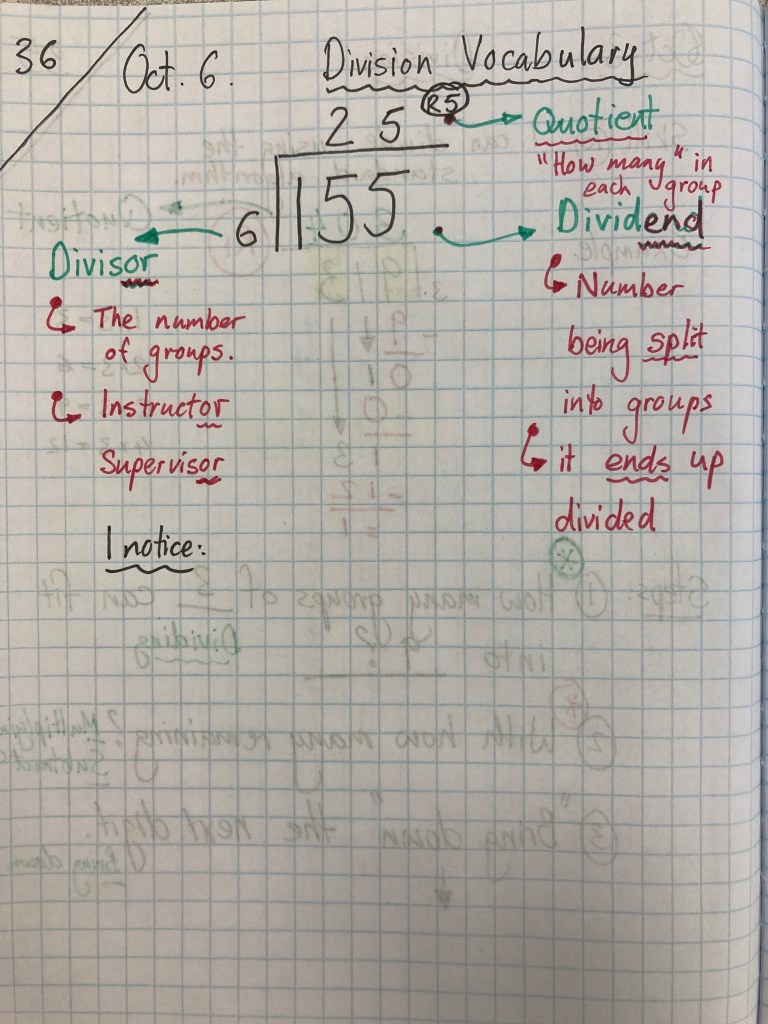
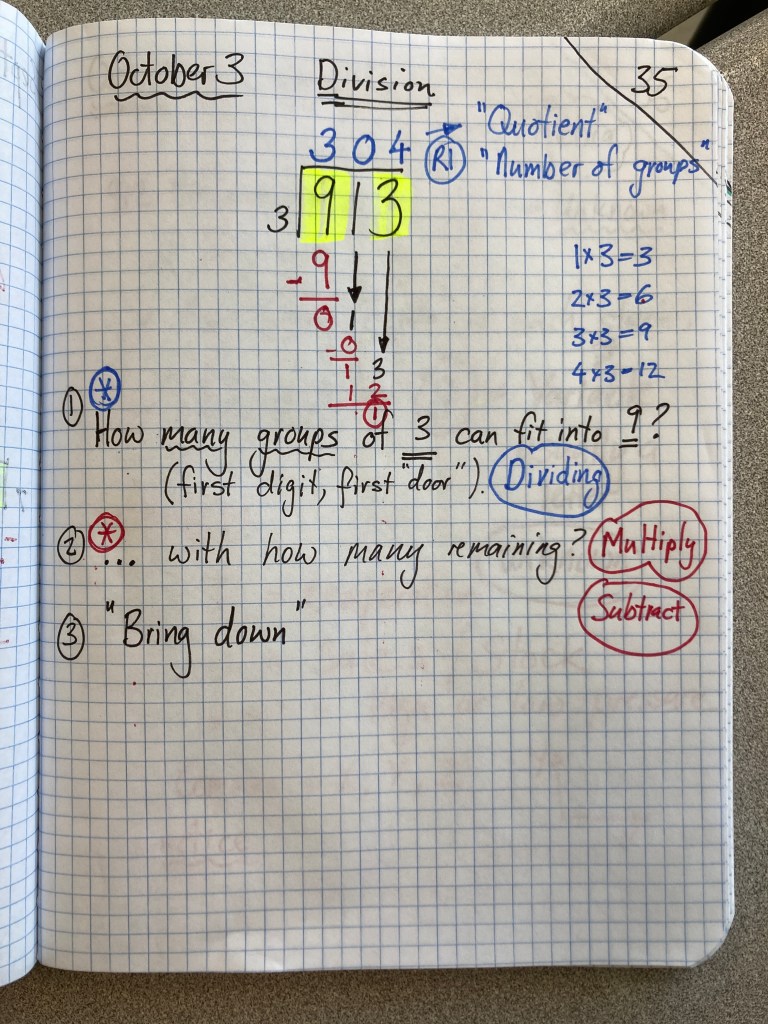
Today’s lesson focused on learning and reviewing the vocabulary of division.
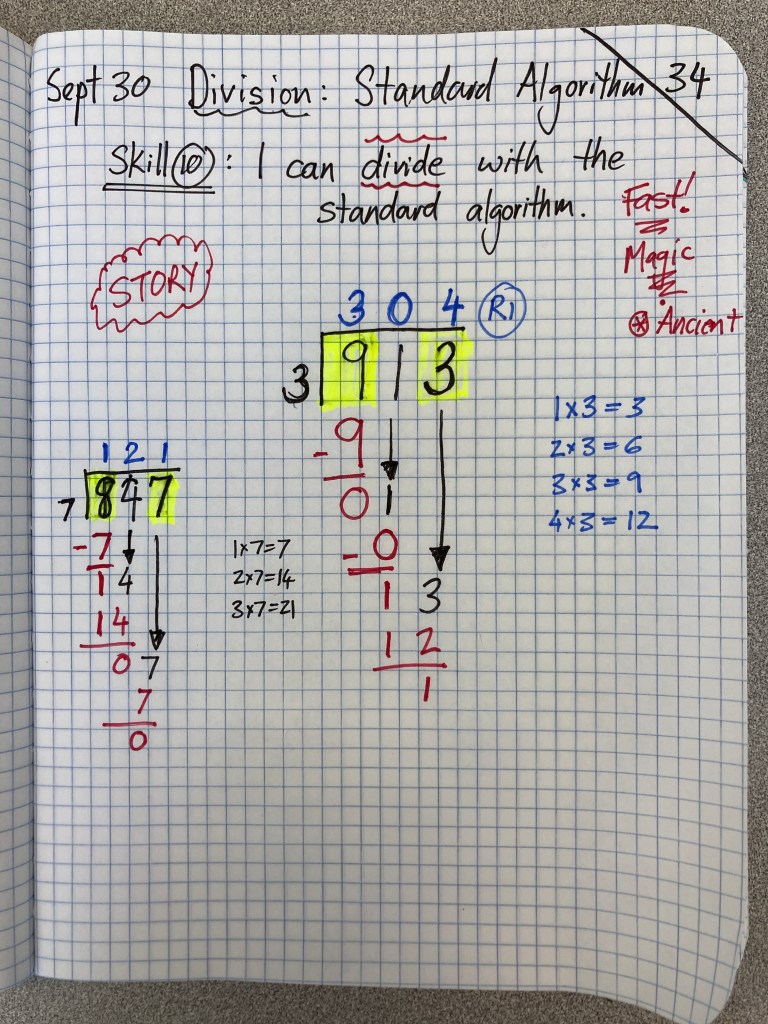
Today we started one of my favorite topics – the standard algorithm for division. We will revisit this topic multiple times this year, as it is a really important skill. We started by examining how this ancient algorithm works and how we use it. We saw how fast and accurate it can be!
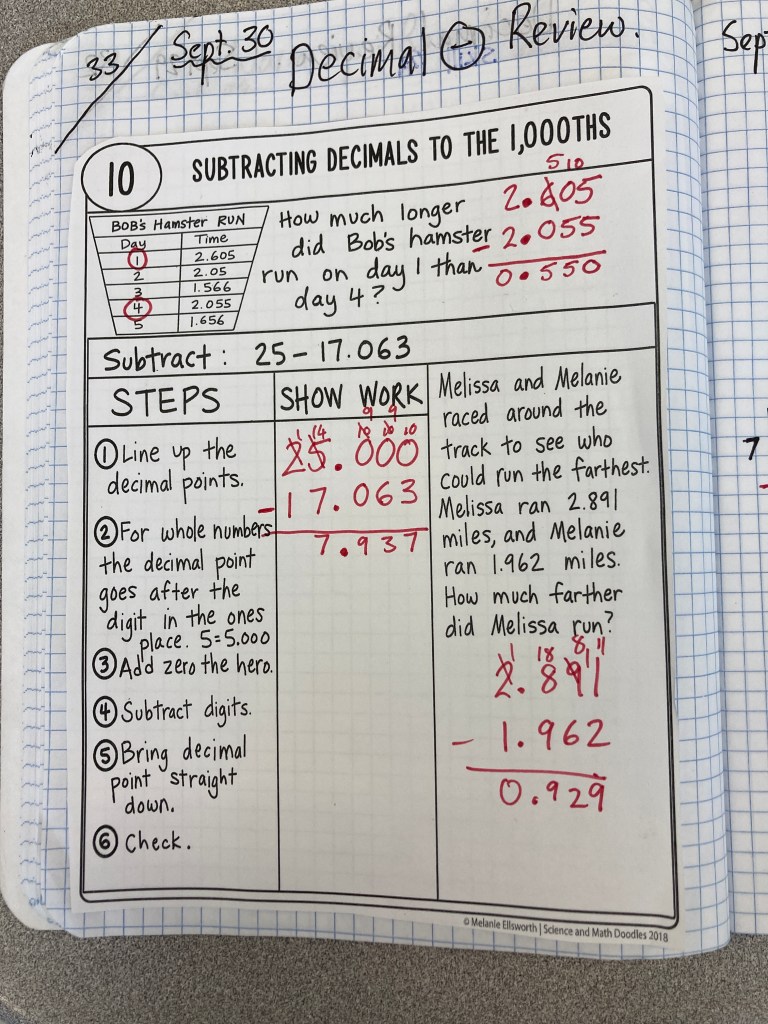
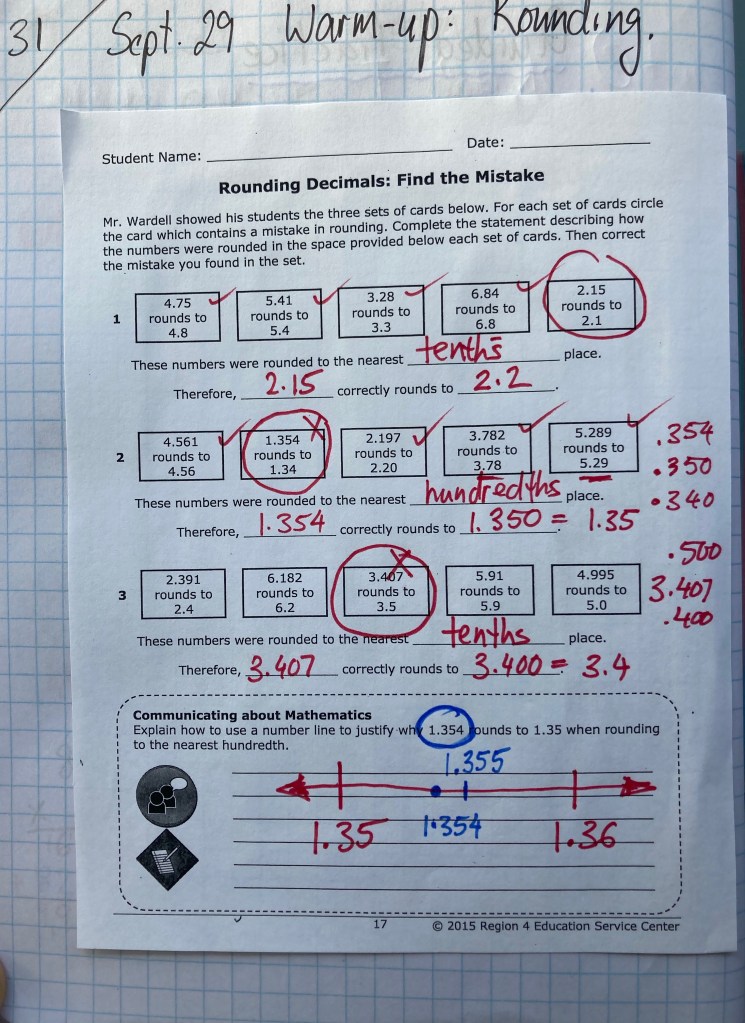
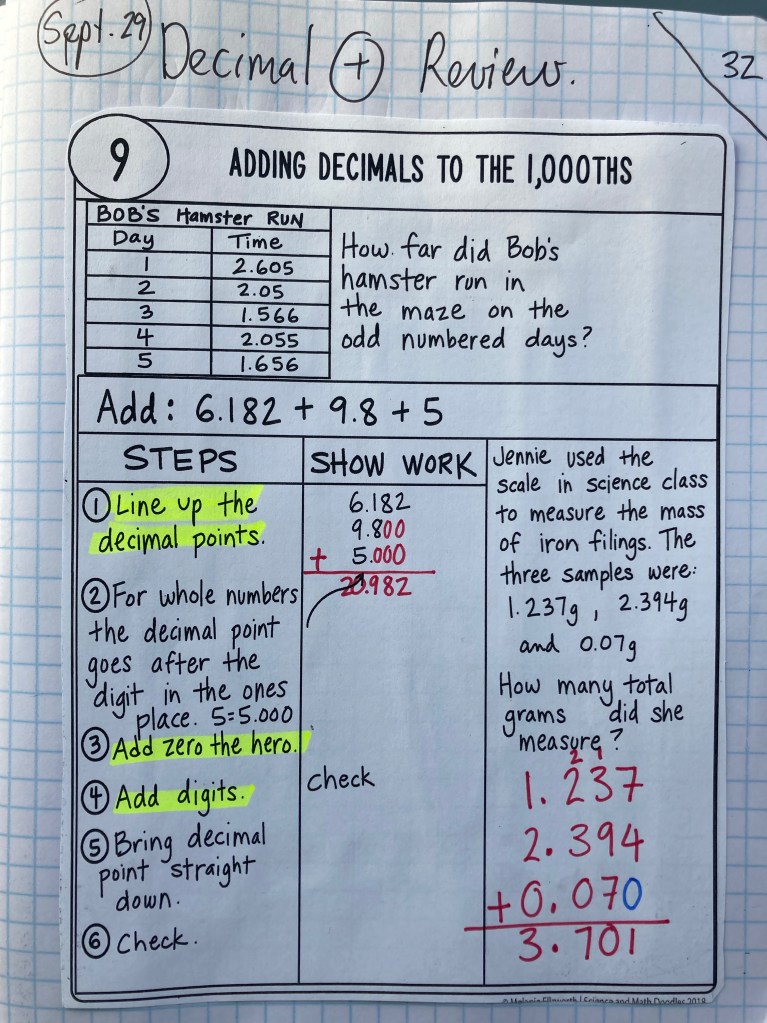
For warm up today, we completed an error analysis of rounded decimals. Our lesson was a brief review of adding decimals.
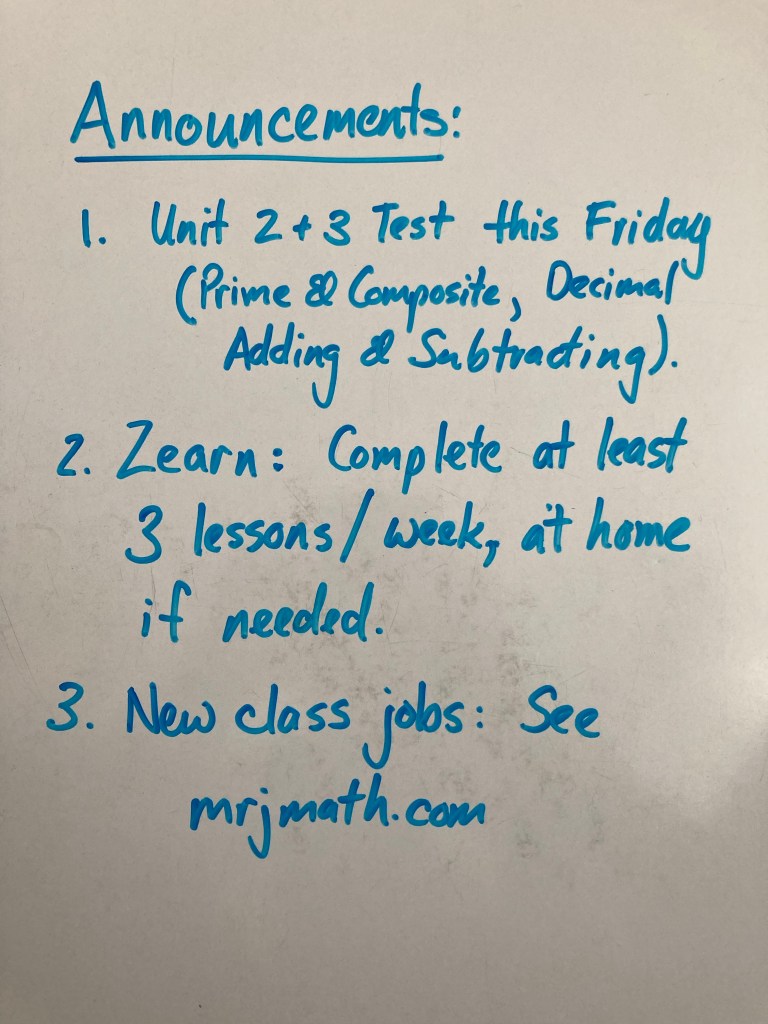
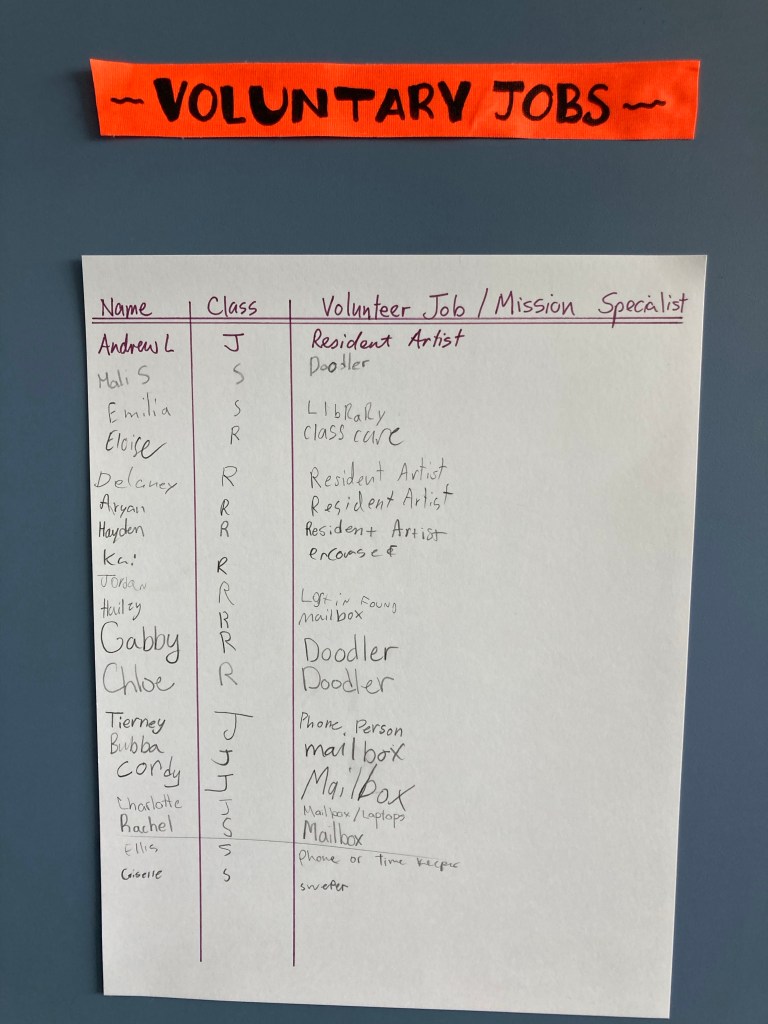
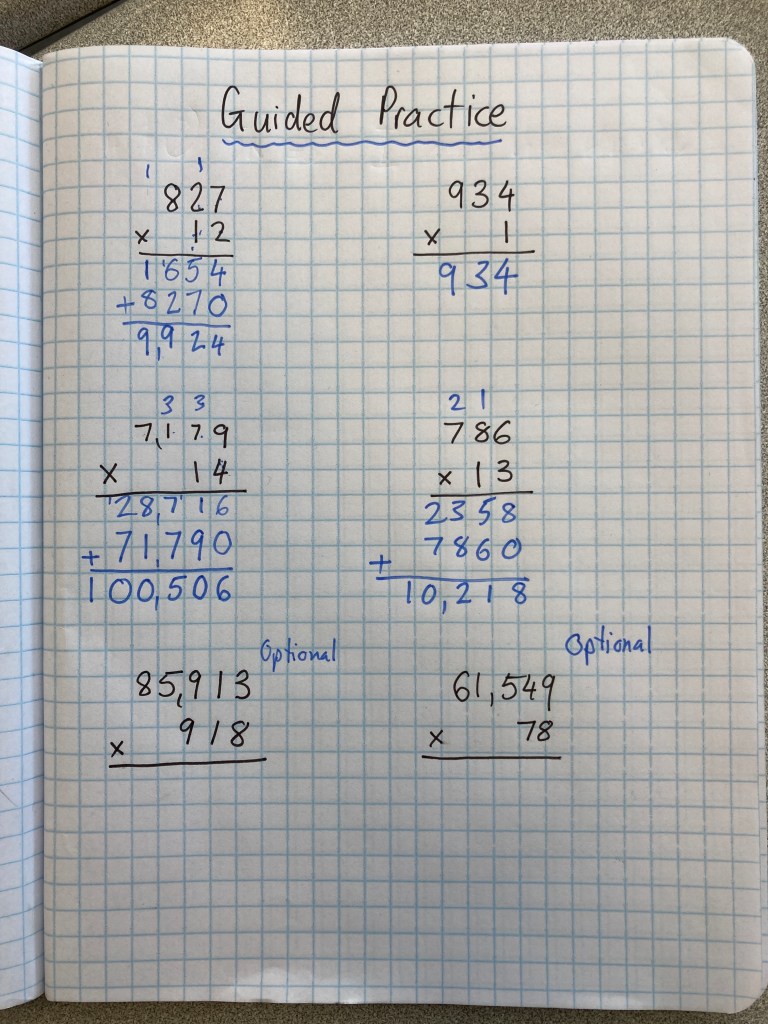
Hi 5th graders, today we had a whiteboard lesson practicing the standard algorithm for multiplication. So, no lesson notes today. Instead, we have announcements and new job rotations. See you tomorrow!

Hello Families,
On Friday I sent home the results from the Renaissance 360 Universal Screener for Math. The Renaissance Screener helps to gauge progress against grade-level skills (though not student math ability). We use the results to see where students need extra support or additional challenge.
More info about the test is below or at the Renaissance website. If you didn’t receive the Renaissance results, please let me know. We will take Renaissance again in December / January.
Sincerely,
Mr. Johnston
About the Renaissance Screener: Taken three times per year (beginning-, middle-, and end-of-year), the Renaissance Screener is intended to test progress and skill mastery in a variety of math topics. It is 35 questions long, taken online, and completed by all HISD students and many other districts in the United States. It does not contribute to student grades. (Note that the Renaissance Screener is called Star but it bears no relation to the Texas-mandated STAAR test).
How to read Renaissance results: On the Star Family Report, Renaissance Screener shows student progress by percentile (when compared to all students who take the Renaissance this year across the country) and level of mastery. Student mastery is shown as green (at or above benchmark), blue (on watch), yellow (extra support needed), red (more extensive support needed).
Progress over time: I have also included a copy of a graph showing each time your student has completed Renaissance. This is perhaps the most useful, as it shows the trend of a student’s Renaissance Scores.
Today’s lesson starts us on Unit 4. We are learning Skill 9: I can multiply using the standard algorithm. We learned how this algorithm works and it’s benefits in speed and accuracy.

Here’s a summary of what we covered in Unit 3, prime and composite. This is the first unit of entirely new material for 5th grade. Yay!
Skills:
Lessons & mini-lessons:
Extra practice: Download extra practice questions
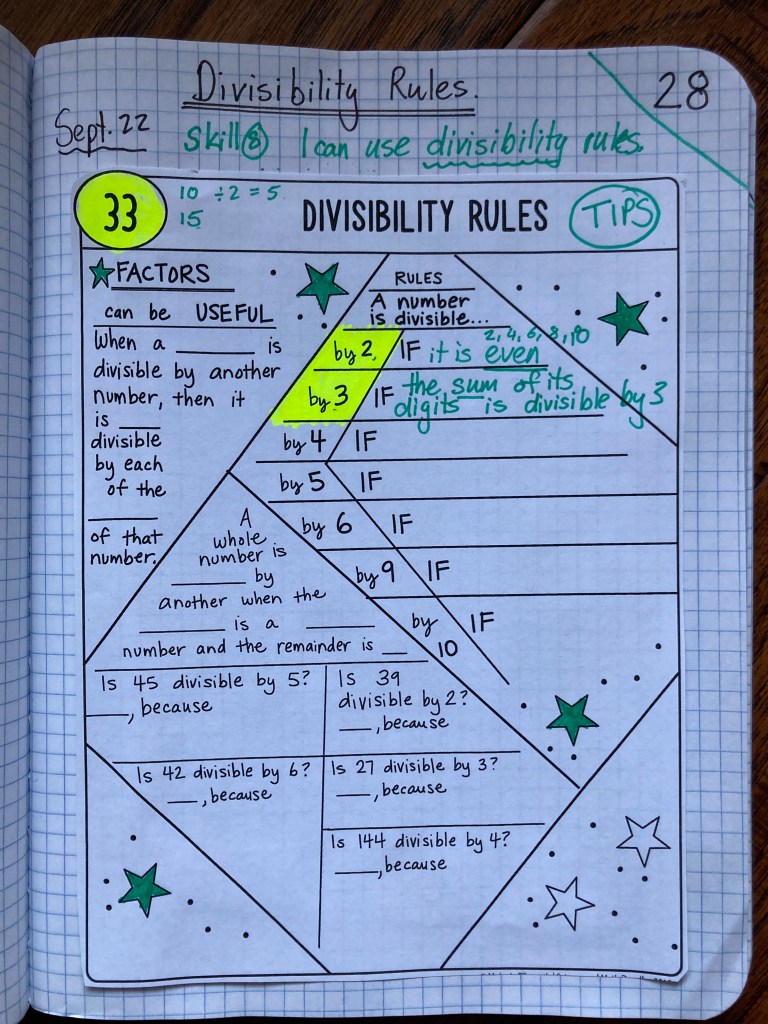
To wrap up unit 3 on prime and composite, we learned some of the divisibility rules which can help us know whether a number is divisible by another number. Today we did the rules for 2 and 3. We will come back to these tomorrow and in the week ahead. It’s best to practice these over time!
Hello 5th Graders,
We have some important jobs to do in our class. I’m glad I have you to help me! The videos at the links below will show you what’s expected of each job. Watch the video for your job and let’s get to work. It takes all of us to make a great classroom.
-Mr. J
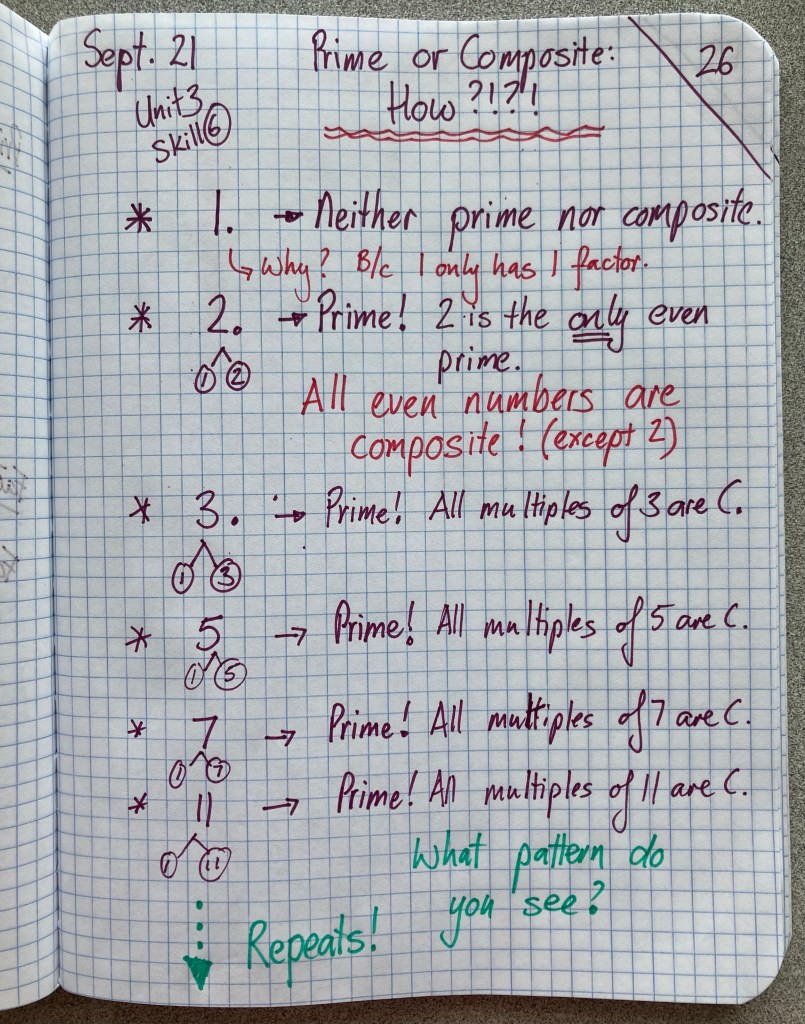
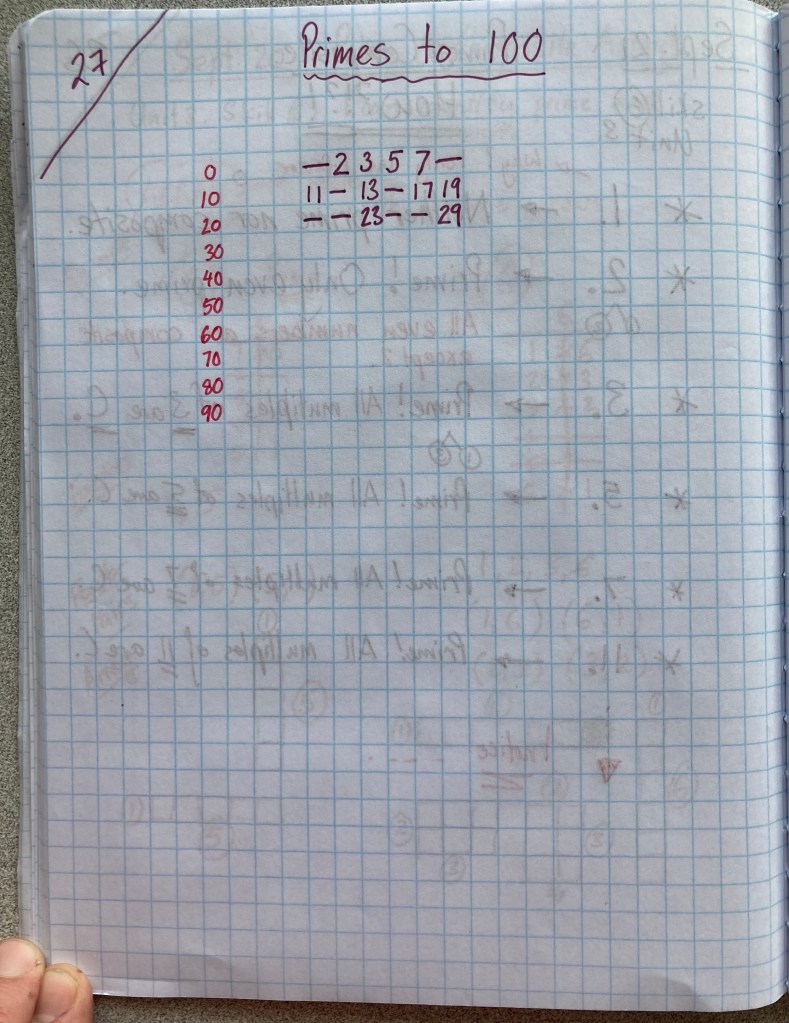
This lesson focused on how we can use general rules or patterns to help identify prime and composite numbers. We also started building a visual summary of the primes to 100. We will come back to that summary every couple of days.

 Mr. J’s Math Class