Practice questions and solutions

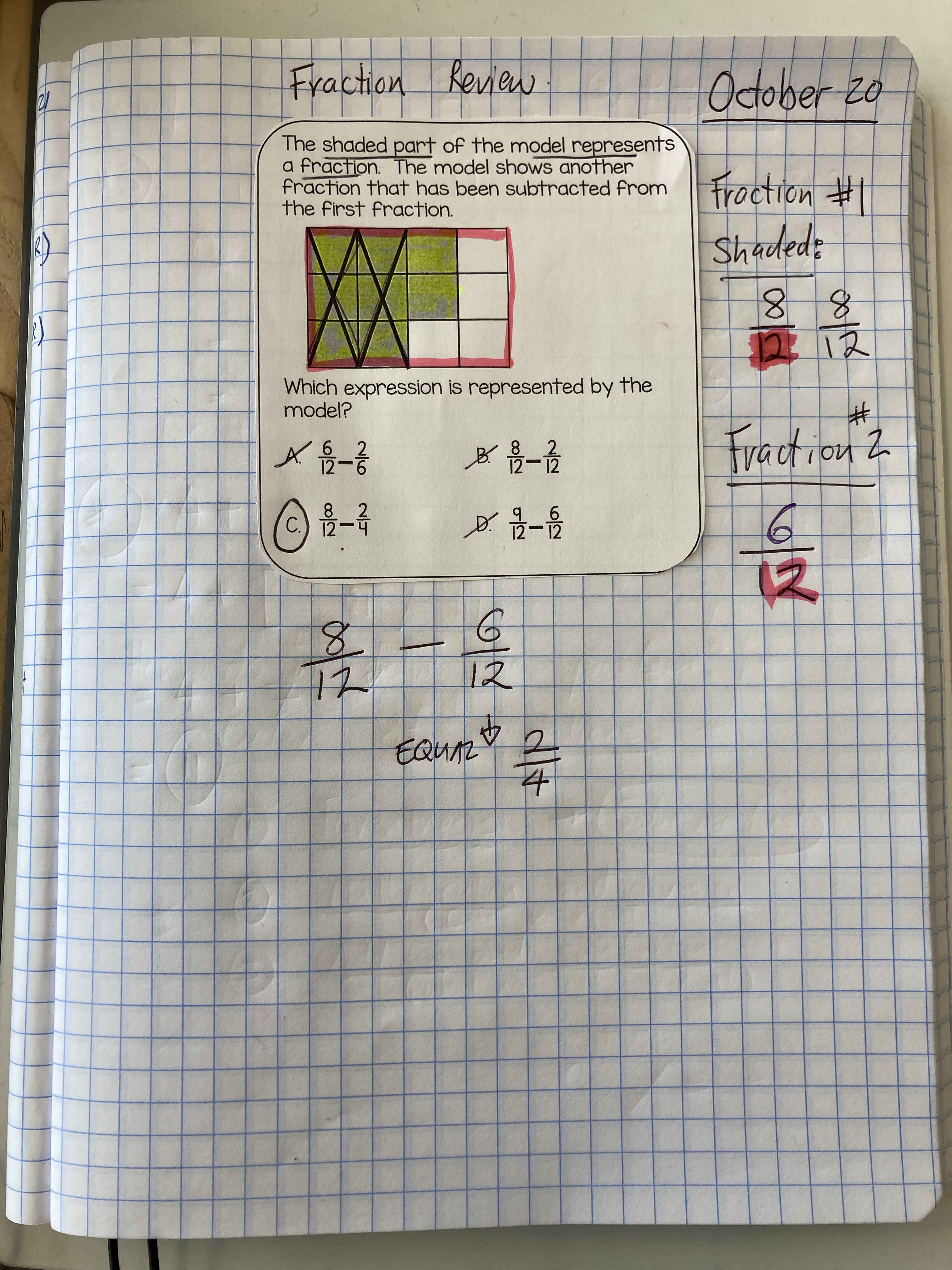
Good afternoon! Here is a PDF of the workings and solutions to the practice questions we’ve worked on in class.

I’m posting them so that you can review and compare where you may have questions or want to check your work. This will also help to show the strategies we practiced in class.

Weekly objectives (Oct. 25 / week 10)

Good afternoon!

Our objectives this week:

Complete Snapshot 1 on Friday: Snapshot 1 is an assessment taken by all district students to assess our learning and skills over the first seven units of class. The test is 18 multiple choice questions. It is an important opportunity to show what you’ve learned!

Complete Snapshot prep questions in class: We are completing all of the released practice questions (30) in class, expecting to finish by Wednesday. Remember to follow along and confirm your understanding as we review questions each day in class. (Edit: please see below for a link to the practice questions.)

Complete stations: Math stations this week are fact fluency (flash cards), complete Unit 4 practice (converting decimals to fractions), Mr. J’s table, and Kahn Academy.

Review Snapshot questions on Wednesday and Thursday at home: I will post the completed practice question packet later this week. Please take time on Wednesday and Thursday to review the completed questions and your notes to prepare for Friday’s test.

Our graded work this week:

– Complete the snapshot review packet and turn in by Friday

– Ensure your journal is ready for a progress grade this week.

– Turn in your station stack by Friday (See Unit 4 practice below for one of the stations).

This is going to be a good week, everyone! Make it happen. 👍😊

Files:

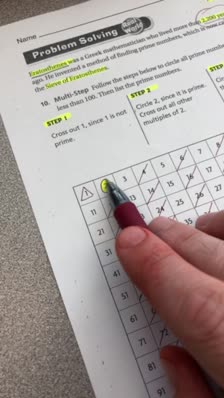
Teach Your Family Friday: How to find prime and composite numbers up to 100

This weekend, share your learning with a family member or friend. The video above shows how to find all the prime numbers up to 100 in a very easy (and ancient algorithm). This is the same method in your notebook. Have a great weekend!

How to read word problems (and find the operations)

Today we spent time learning how to read a math problem – particularly a word problem. We saw how often the challenge is understanding or “disentangling” what the question means before we can solve. Being methodical and using these strategies will help. Our notes and practice today shows the steps to use when reading a problem.

How to use this blog

Hello!

I’ve put together this blog as a resource for you.

Each day after school I will post a picture of that day’s lesson notes. You can use the daily post to check your notes, finish copying down work we did in class, or find what we did if you were absent. I plan also to post answer keys, announcements, and links to classwork and maybe a student guest post (or several)!

For your families, I hope the daily post gives more insight into class activities and how our families can support our learning.

Because I teach three classes, the notes I publish may look a little different from the notes in your math journal. If you have any questions, let me know.

Right now the daily post will only cover our mini-lesson and not our warm-ups, number talk, guided practice, independent practice or small groups. We may incorporate these other elements if helpful. I’m open to your ideas!

Remember, you’re an important part of our class, your work matters, and I’m glad you’re here!

See you in class,

Mr. J

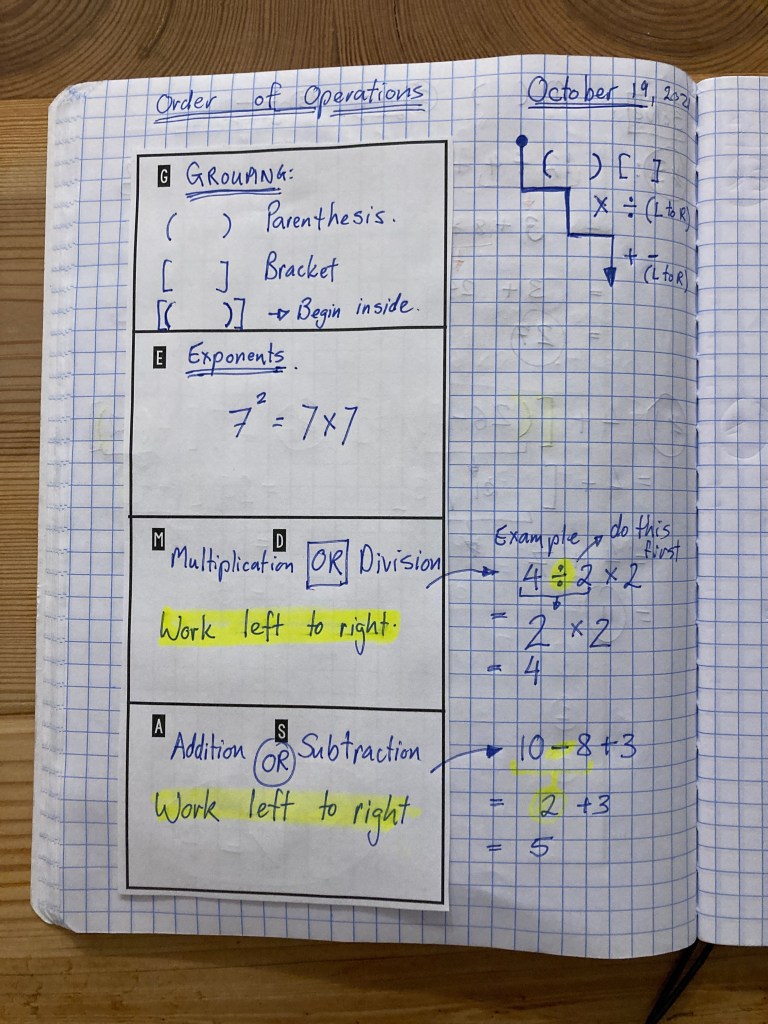
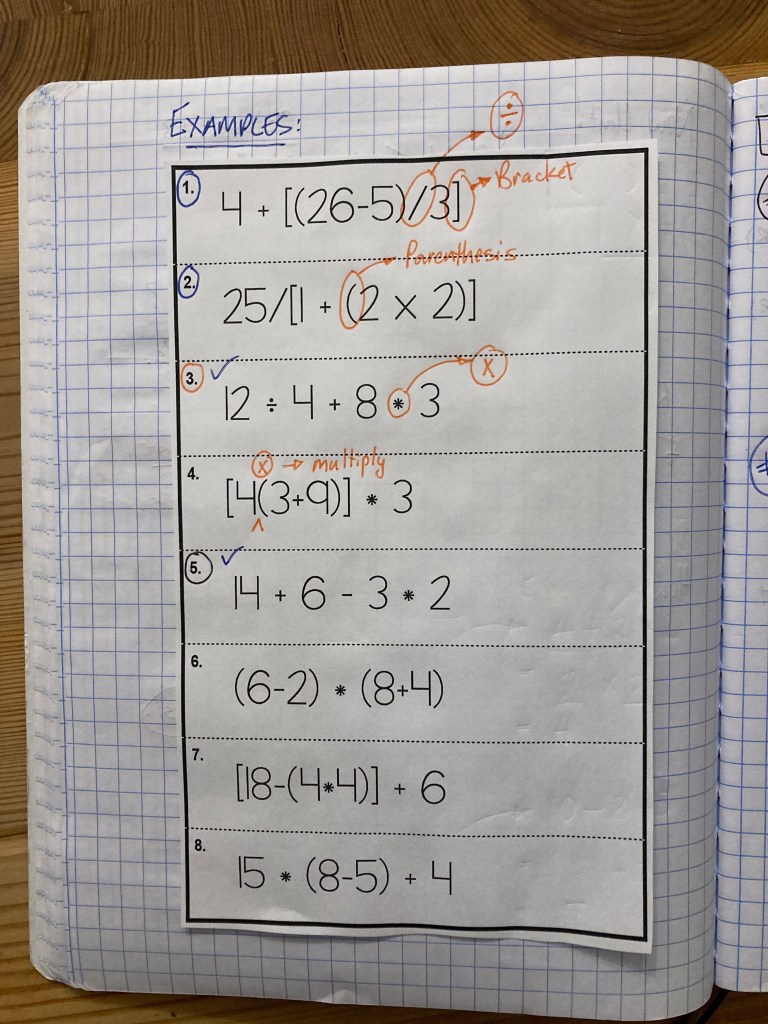
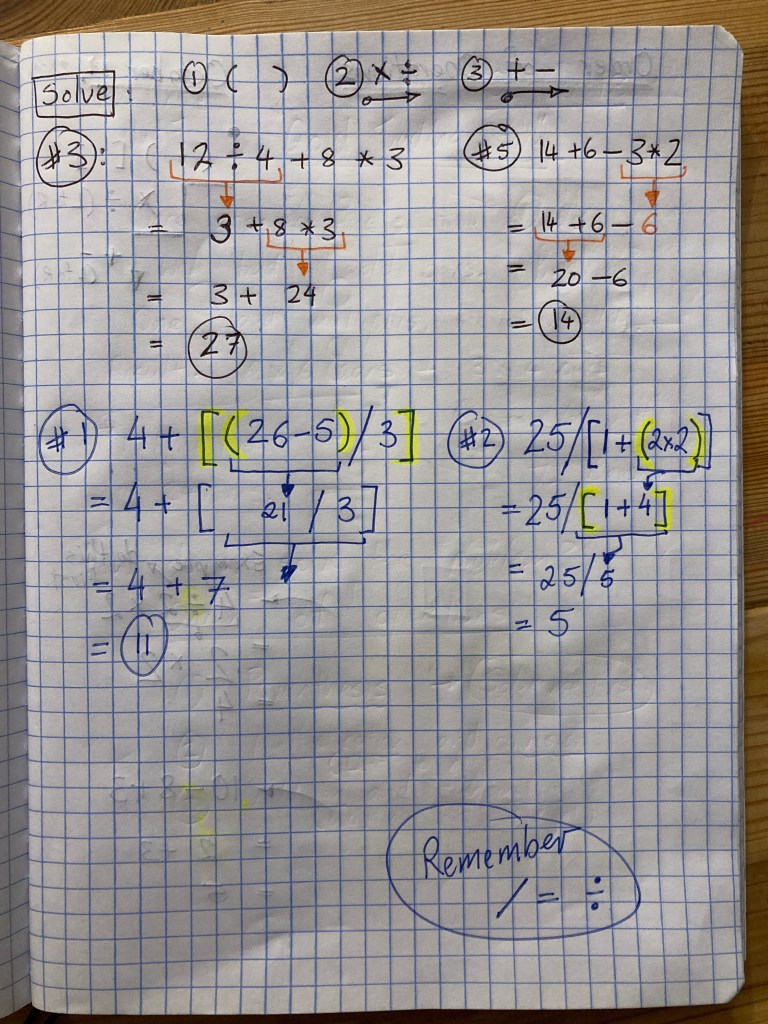
The order of operations

Today we took a more detailed look at the order of operations. We noticed how it is important to work through each level or layer of the operations (like a checklist). We looked at different kinds of grouping, why we use grouping symbols, and how we need to be careful to solve the operations from left to right when working with multiplication and division and then addition and subtraction.

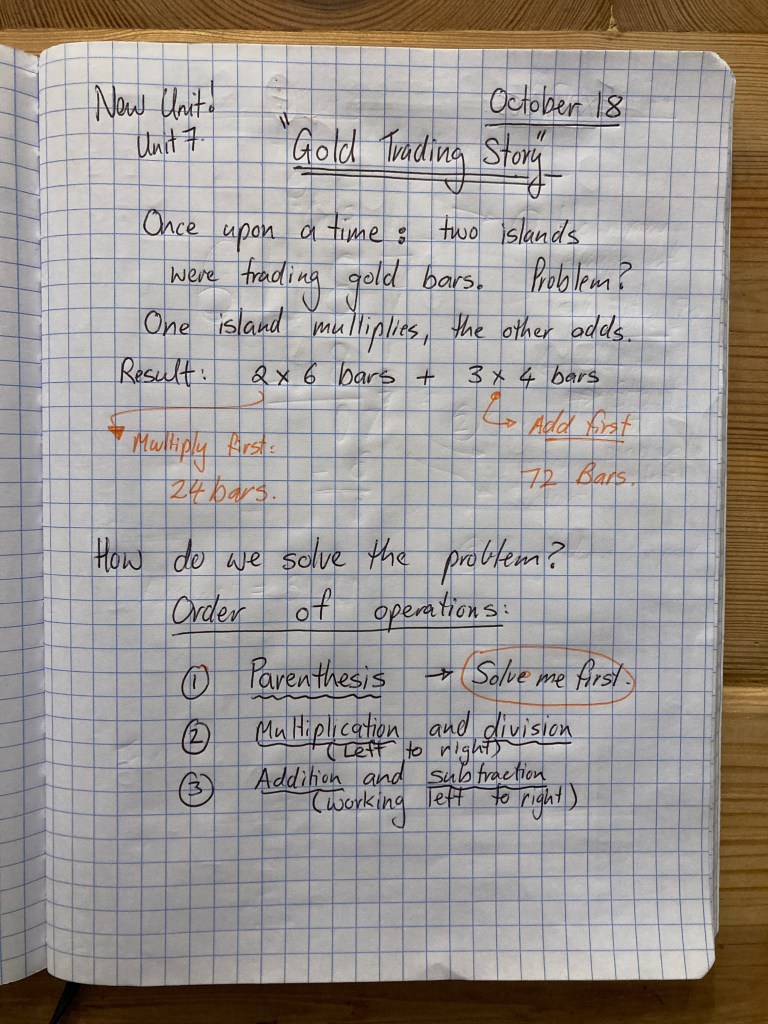
The gold trading story … also known as the order of operations

Our new unit today (Unit 7) began with a short story to show how two islands trading gold bars made a mistake because one always multiplied first and the other always added first. We saw how, applied to the real world, we need to have an order in which we do our mathematical operations. We looked at what that order is and applied it to a few examples (numbers 3 and 5).

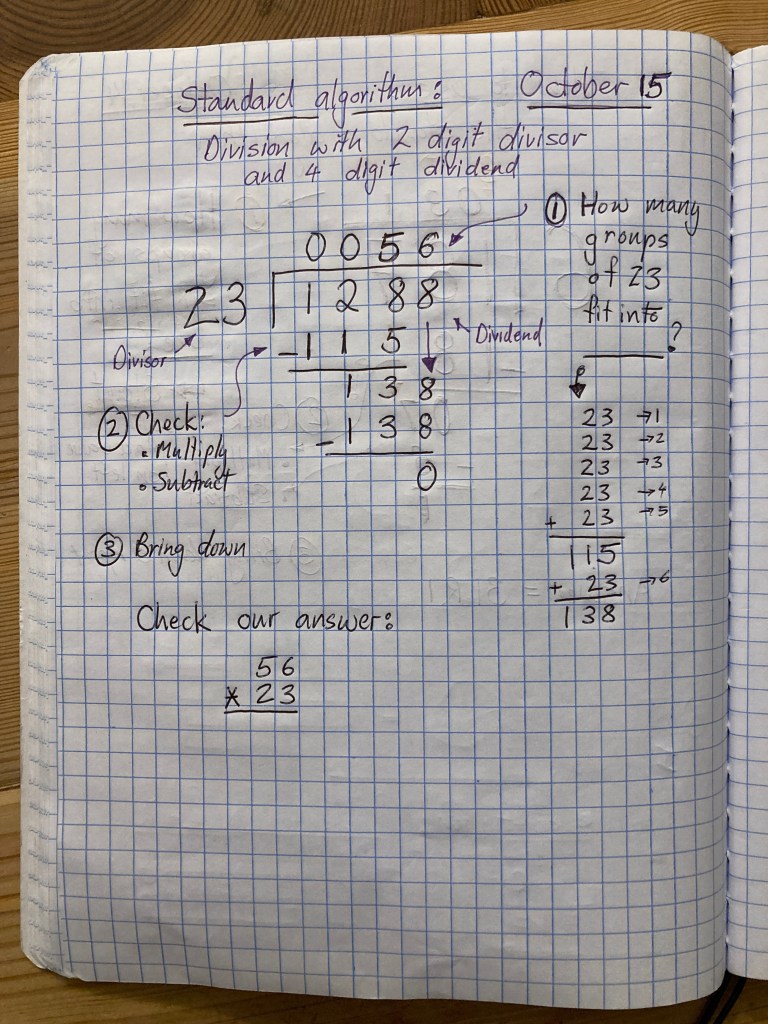
How to use the standard algorithm for division with a two digit divisor and a four digit dividend

Our lesson today increased the complexity of the example we are using to learn the standard algorithm. We learned how the same steps apply to dividing a four-digit dividend by a two-digit divisor.

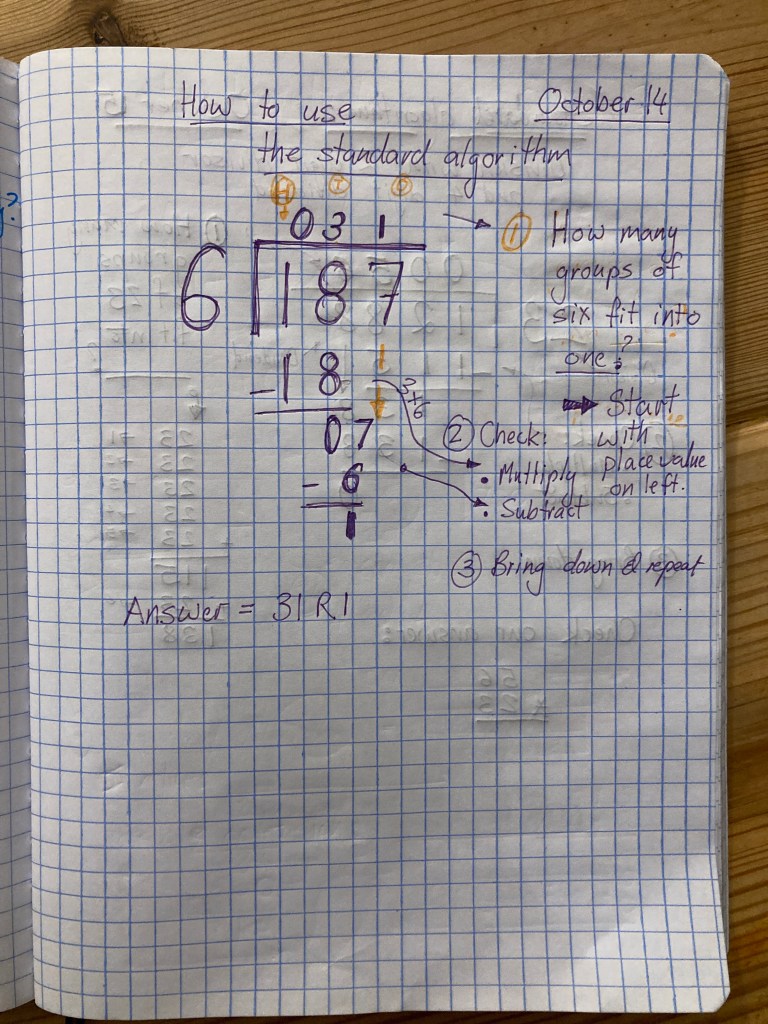
How to use the standard algorithm for division

Today’s lesson focused on the steps we use for the standard algorithm. We compared today’s example to the simpler version from yesterday without a remainder. We noticed how the algorithm works because it takes advantage of place value to solve the question without many steps.